
PROJECT WWWN
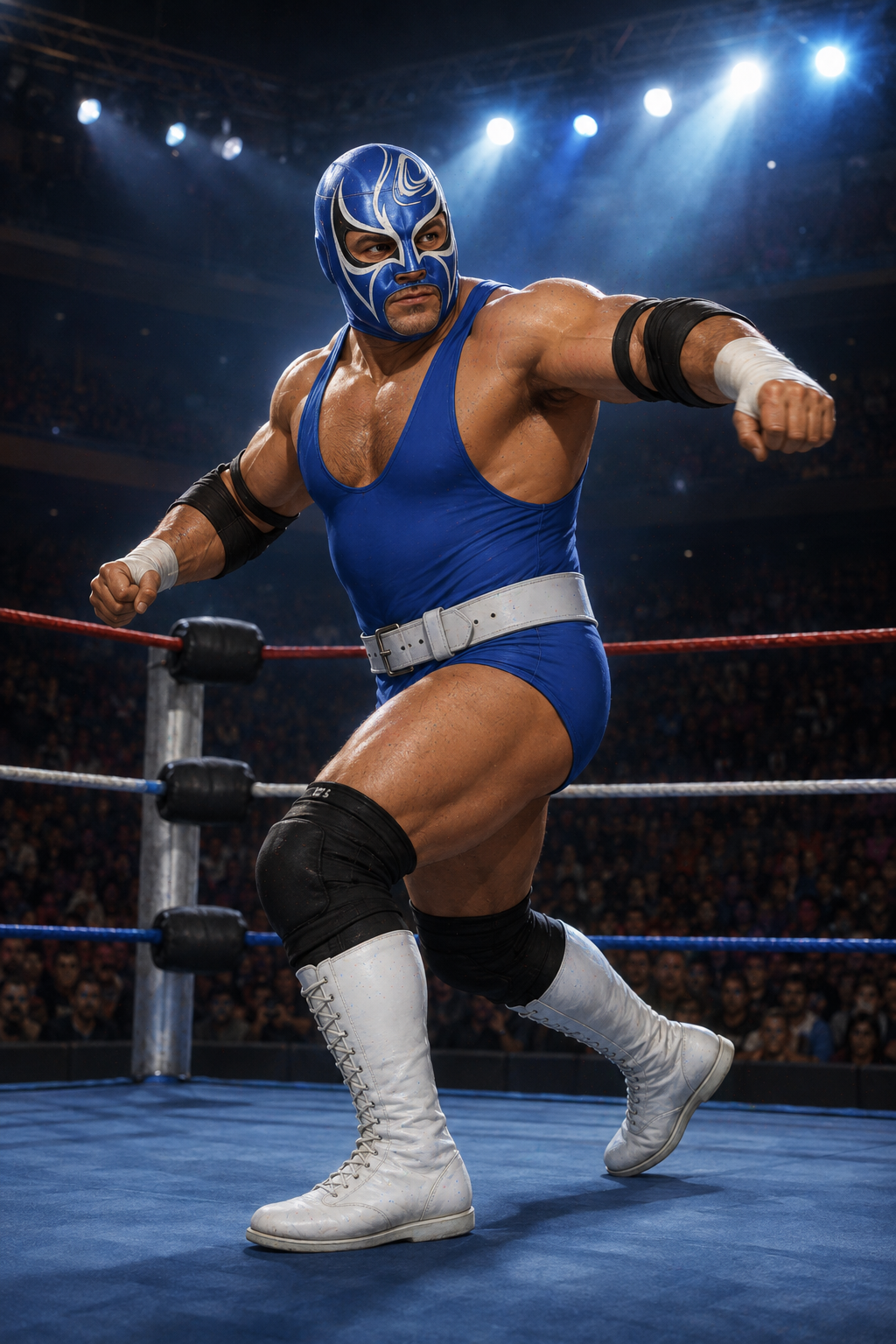
Billed From | Height | Weight | Wrestling Style |
|---|---|---|---|
Tornado Alley, Kansas | 6’2 | 270 | Powerhouse · Striker · Old-School Brawler |
Signature Moves | Trademark Moves | Inspired By | Fights Like |
|---|---|---|---|
Airplane Spin
Running Knee Lift
Swinging Neckbreaker
Loaded Boot Kick (Illegal / situational) | Cyclone Piledriver
Bearhug Submission | Classic American Masked Superstars | Stan Hansen
The Grappler
Mr. Wrestling II
Dick Beyer
Terry Funk
Stan Hansen
The Masked Superstar
Super Destroyer
The Grappler
The Mongolian Stomper
Mr. Olympia
The Executioner
Mr. Wrestling II
The Assassin (Jody Hamilton)
The Masked Spoiler
Dr. X
The Destroyer (Dick Beyer – American) |
Trained By | Theme | Video Link |
|---|---|---|
The Blue Cyclone Lineage Committee
(Cyclones II, III, and IV) |
Profile Overview |
|---|
The Blue Cyclone is not a gimmick, a reboot, or a tribute act. He is a constant. For generations, the name has carried weight because the man behind it never allowed it to become hollow. While the world around him changed—styles speeding up, promotions rising and falling, wrestling itself reshaping its priorities—the Blue Cyclone endured by adapting without ever abandoning his principles. In the eyes of the public, there has only ever been one Blue Cyclone, a figure who seems to move through eras rather than age within them.
He first emerged in the mid-1950s, a quiet and imposing presence at a time when loud personalities and exaggerated villains dominated the landscape. He wore the mask not for mystery, but for protection—of his family, his private life, and the things he chose not to explain to a business that demanded easy labels. He spoke little, preferring to let his work establish authority. From the beginning, his philosophy was clear: no wasted motion, no unnecessary cruelty, and absolute respect for the people sharing the ring.
As the industry shifted in the 1970s, the Blue Cyclone became more deliberate, more disciplined. He traveled constantly, worked different crowds, and refined his approach as wrestling itself became more volatile. He was known as a stabilizing presence in locker rooms, someone promoters trusted to keep things grounded when emotions ran hot. His matches were physical but controlled, intense without being reckless. He never chased headlines, only credibility.
By the 1980s and into the 1990s—an era most fans remember most clearly—the Blue Cyclone had become a fixture across multiple regions. His appearance allowed him to move freely between locker rooms at a time when wrestling still relied heavily on rigid roles, keeping the focus on the mask and the work rather than easy categorization. His style reached its most complete form during this period: deliberate pacing, heavy strikes, repetition, and inevitability. Watching a Blue Cyclone match meant watching pressure build until resistance simply gave out.
When wrestling entered its boom years and nostalgia became a commodity, the Blue Cyclone receded from the spotlight but never disappeared. He refused to allow his name to be diluted or exploited, quietly confronting those who attempted to misuse the identity. Where others licensed their legacy, he guarded his. He worked selectively, always on his terms, always in ways that preserved the integrity of what the Blue Cyclone represented.
In the modern era, the Blue Cyclone remains an anachronism by design. He avoids written contracts, preferring handshake deals and pay-per-appearance agreements. He refuses death matches and gratuitous violence, believing that brutality without purpose cheapens the craft. He is known for hitting hard in safe places—matches that look violent, feel controlled, and leave everyone able to work the next night.
Backstage, he is respectful and present. He speaks. He shakes hands. He thanks referees and crew. To those who approach him properly, he is a quiet learning tree, offering guidance on pacing, placement, and professionalism. To those who chase ego or spectacle, he offers no patience.
Wrestling changes. The Blue Cyclone does not. And because of that, the business is forced—every so often—to slow down and remember what it is supposed to be. |
The Blue Cyclone is not a gimmick, a reboot, or a tribute act. He is a constant. For generations, the name has carried weight because the man behind it never allowed it to become hollow. While the world around him changed—styles speeding up, promotions rising and falling, wrestling itself reshaping its priorities—the Blue Cyclone endured by adapting without ever abandoning his principles. In the eyes of the public, there has only ever been one Blue Cyclone, a figure who seems to move through eras rather than age within them.
He first emerged in the mid-1950s, a quiet and imposing presence at a time when loud personalities and exaggerated villains dominated the landscape. He wore the mask not for mystery, but for protection—of his family, his private life, and the things he chose not to explain to a business that demanded easy labels. He spoke little, preferring to let his work establish authority. From the beginning, his philosophy was clear: no wasted motion, no unnecessary cruelty, and absolute respect for the people sharing the ring.
As the industry shifted in the 1970s, the Blue Cyclone became more deliberate, more disciplined. He traveled constantly, worked different crowds, and refined his approach as wrestling itself became more volatile. He was known as a stabilizing presence in locker rooms, someone promoters trusted to keep things grounded when emotions ran hot. His matches were physical but controlled, intense without being reckless. He never chased headlines, only credibility.
By the 1980s and into the 1990s—an era most fans remember most clearly—the Blue Cyclone had become a fixture across multiple regions. His appearance allowed him to move freely between locker rooms at a time when wrestling still relied heavily on rigid roles, keeping the focus on the mask and the work rather than easy categorization. His style reached its most complete form during this period: deliberate pacing, heavy strikes, repetition, and inevitability. Watching a Blue Cyclone match meant watching pressure build until resistance simply gave out.
When wrestling entered its boom years and nostalgia became a commodity, the Blue Cyclone receded from the spotlight but never disappeared. He refused to allow his name to be diluted or exploited, quietly confronting those who attempted to misuse the identity. Where others licensed their legacy, he guarded his. He worked selectively, always on his terms, always in ways that preserved the integrity of what the Blue Cyclone represented.
In the modern era, the Blue Cyclone remains an anachronism by design. He avoids written contracts, preferring handshake deals and pay-per-appearance agreements. He refuses death matches and gratuitous violence, believing that brutality without purpose cheapens the craft. He is known for hitting hard in safe places—matches that look violent, feel controlled, and leave everyone able to work the next night.
Backstage, he is respectful and present. He speaks. He shakes hands. He thanks referees and crew. To those who approach him properly, he is a quiet learning tree, offering guidance on pacing, placement, and professionalism. To those who chase ego or spectacle, he offers no patience.
Wrestling changes. The Blue Cyclone does not. And because of that, the business is forced—every so often—to slow down and remember what it is supposed to be.
Profile Wrestling Style |
|---|
The Blue Cyclone wrestles with pressure and inevitability. His offense centers on heavy punches, forearms, shoulder blocks, body slams, suplexes, and grinding holds applied repeatedly until resistance fades. He favors repetition over variety, authority over speed, and consequence over chaos.
He is known for hitting hard in safe places. Strikes are loud and frightening but expertly placed. Slams are violent in appearance yet structurally sound. Opponents consistently remark that Cyclone matches look brutal on tape while feeling controlled in execution.
Backstage, Cyclone is respectful and present. He speaks. He shakes hands. He thanks referees and crew. He is a quiet learning tree for those who approach him properly, offering brief instruction on pacing, placement, and protection. He avoids written contracts, preferring pay-per-appearance and handshake agreements—even during the late-90s boom. He categorically refuses death matches and ultra-violence. Violence must serve the match, the story, and the people involved—or it serves nothing. |
The Blue Cyclone wrestles with pressure and inevitability. His offense centers on heavy punches, forearms, shoulder blocks, body slams, suplexes, and grinding holds applied repeatedly until resistance fades. He favors repetition over variety, authority over speed, and consequence over chaos.
He is known for hitting hard in safe places. Strikes are loud and frightening but expertly placed. Slams are violent in appearance yet structurally sound. Opponents consistently remark that Cyclone matches look brutal on tape while feeling controlled in execution.
Backstage, Cyclone is respectful and present. He speaks. He shakes hands. He thanks referees and crew. He is a quiet learning tree for those who approach him properly, offering brief instruction on pacing, placement, and protection. He avoids written contracts, preferring pay-per-appearance and handshake agreements—even during the late-90s boom. He categorically refuses death matches and ultra-violence. Violence must serve the match, the story, and the people involved—or it serves nothing.