
PROJECT WWWN
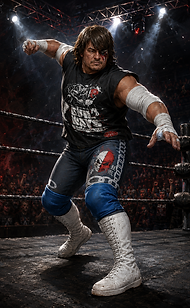
Billed From | Height | Weight | Wrestling Style |
|---|---|---|---|
5’11” | 242 lbs | Hardcore, Brawler, Hybrid Technician |
Signature Moves | Trademark Moves | Inspired By | Fights Like |
|---|---|---|---|
DDT
High-Impact Lariat
Sleeper Hold
Rolling Neckbreaker
Powerbomb (Non-Finish) | Spike Piledriver
Thunder Fire Powerbomb
Fire Thunder Driver
Gannosuke Clutch
Nirvana Strangle (Full Nelson Camel Clutch) | Mr. Pogo
Atsushi Onita
Mr. Gannosuke | Mr. Pogo
Atsushi Onita
Mr. Gannosuke |
Trained By | Theme | Video Link |
|---|---|---|
Profile Overview |
|---|
Dake Ken is known throughout WWWN as a man who does not raise his voice because he never needs to. Forged in the unforgiving culture of Dead or Alive Wrestling, Ken approaches every match as an exercise in control rather than spectacle. He does not chase chaos or crowd approval; instead, he methodically applies pressure until the environment bends around him. His presence alone signals a change in tone—matches become slower, heavier, and more deliberate the moment he steps through the ropes. Ken wrestles like someone who has already accepted pain as a cost of doing business, and that acceptance unnerves opponents who rely on intimidation or momentum. Every movement feels practiced, not rehearsed—experience distilled into instinct. In WWWN, Ken is not advertised as danger; he demonstrates it.
There are moments, however, when Dake Ken sheds restraint and something colder emerges. This is when the crowd whispers the other name—the one he never announces himself. The Great Ken is not a transformation born of rage or mysticism, but of intent. Where Dake Ken grinds opponents down, The Great Ken dismantles them with theatrical cruelty and absolute finality. His posture changes, his pacing tightens, and his offense becomes sharper, almost ritualistic. Submissions linger longer, head drops become more deliberate, and the finish feels less like victory and more like judgment. The Great Ken does not seek to win quickly; he seeks to end resistance in a way that leaves no doubt. Opponents who survive Dake Ken fear facing The Great Ken, because they understand the difference—one is a professional enforcer, the other an executioner.
Within WWWN, Ken’s dual identity has become legend rather than gimmick. Some claim The Great Ken only appears when respect is denied or when violence escalates beyond what the match demands. Others believe the persona is always there, waiting for Ken to decide that mercy is no longer productive. What cannot be denied is the effect: opponents change how they prepare, crowds grow quiet when the switch happens, and matches take on an oppressive gravity. Dake Ken represents discipline in chaos; The Great Ken represents inevitability. Together, they form a competitor who does not simply survive WWWN’s most brutal environments—he defines the standard by which others are measured. |
Dake Ken is known throughout WWWN as a man who does not raise his voice because he never needs to. Forged in the unforgiving culture of Dead or Alive Wrestling, Ken approaches every match as an exercise in control rather than spectacle. He does not chase chaos or crowd approval; instead, he methodically applies pressure until the environment bends around him. His presence alone signals a change in tone—matches become slower, heavier, and more deliberate the moment he steps through the ropes. Ken wrestles like someone who has already accepted pain as a cost of doing business, and that acceptance unnerves opponents who rely on intimidation or momentum. Every movement feels practiced, not rehearsed—experience distilled into instinct. In WWWN, Ken is not advertised as danger; he demonstrates it.
There are moments, however, when Dake Ken sheds restraint and something colder emerges. This is when the crowd whispers the other name—the one he never announces himself. The Great Ken is not a transformation born of rage or mysticism, but of intent. Where Dake Ken grinds opponents down, The Great Ken dismantles them with theatrical cruelty and absolute finality. His posture changes, his pacing tightens, and his offense becomes sharper, almost ritualistic. Submissions linger longer, head drops become more deliberate, and the finish feels less like victory and more like judgment. The Great Ken does not seek to win quickly; he seeks to end resistance in a way that leaves no doubt. Opponents who survive Dake Ken fear facing The Great Ken, because they understand the difference—one is a professional enforcer, the other an executioner.
Within WWWN, Ken’s dual identity has become legend rather than gimmick. Some claim The Great Ken only appears when respect is denied or when violence escalates beyond what the match demands. Others believe the persona is always there, waiting for Ken to decide that mercy is no longer productive. What cannot be denied is the effect: opponents change how they prepare, crowds grow quiet when the switch happens, and matches take on an oppressive gravity. Dake Ken represents discipline in chaos; The Great Ken represents inevitability. Together, they form a competitor who does not simply survive WWWN’s most brutal environments—he defines the standard by which others are measured.
Profile Wrestling Style |
|---|
Dake Ken wrestles with a philosophy rooted in controlled violence. He treats hardcore wrestling not as chaos, but as an environment to be mastered. His offense begins with close-range strikes designed to test reactions and erode confidence rather than overwhelm outright. Once an opponent shows hesitation, Ken shifts seamlessly into grappling control—suplexes, head drops, and positional dominance that slow the pace and trap his opponent in sustained discomfort. He rarely rushes a finish; instead, he layers damage methodically, allowing exhaustion and frustration to do as much work as impact. Every escalation feels intentional, as if Ken is tightening a vice rather than throwing punches blindly. Even in extreme conditions, he remains composed, giving the impression that the match is unfolding exactly as he planned.
Psychologically, Ken’s style is built around restraint as intimidation. He allows opponents to burn energy trying to provoke emotion that never comes, and that emotional imbalance becomes his greatest advantage. When desperation sets in, Ken becomes most dangerous—transitioning smoothly into submissions, sudden cradles, or decisive finishers that punish overcommitment. His use of power is selective, reserved for moments when it will end resistance rather than merely impress. This makes his matches feel suffocating rather than explosive, with momentum shifts that feel earned instead of accidental. In WWWN, Dake Ken represents a rare archetype: a hardcore competitor whose greatest weapon is not brutality itself, but the discipline to apply it with precision. |
Dake Ken wrestles with a philosophy rooted in controlled violence. He treats hardcore wrestling not as chaos, but as an environment to be mastered. His offense begins with close-range strikes designed to test reactions and erode confidence rather than overwhelm outright. Once an opponent shows hesitation, Ken shifts seamlessly into grappling control—suplexes, head drops, and positional dominance that slow the pace and trap his opponent in sustained discomfort. He rarely rushes a finish; instead, he layers damage methodically, allowing exhaustion and frustration to do as much work as impact. Every escalation feels intentional, as if Ken is tightening a vice rather than throwing punches blindly. Even in extreme conditions, he remains composed, giving the impression that the match is unfolding exactly as he planned.
Psychologically, Ken’s style is built around restraint as intimidation. He allows opponents to burn energy trying to provoke emotion that never comes, and that emotional imbalance becomes his greatest advantage. When desperation sets in, Ken becomes most dangerous—transitioning smoothly into submissions, sudden cradles, or decisive finishers that punish overcommitment. His use of power is selective, reserved for moments when it will end resistance rather than merely impress. This makes his matches feel suffocating rather than explosive, with momentum shifts that feel earned instead of accidental. In WWWN, Dake Ken represents a rare archetype: a hardcore competitor whose greatest weapon is not brutality itself, but the discipline to apply it with precision.