
PROJECT WWWN
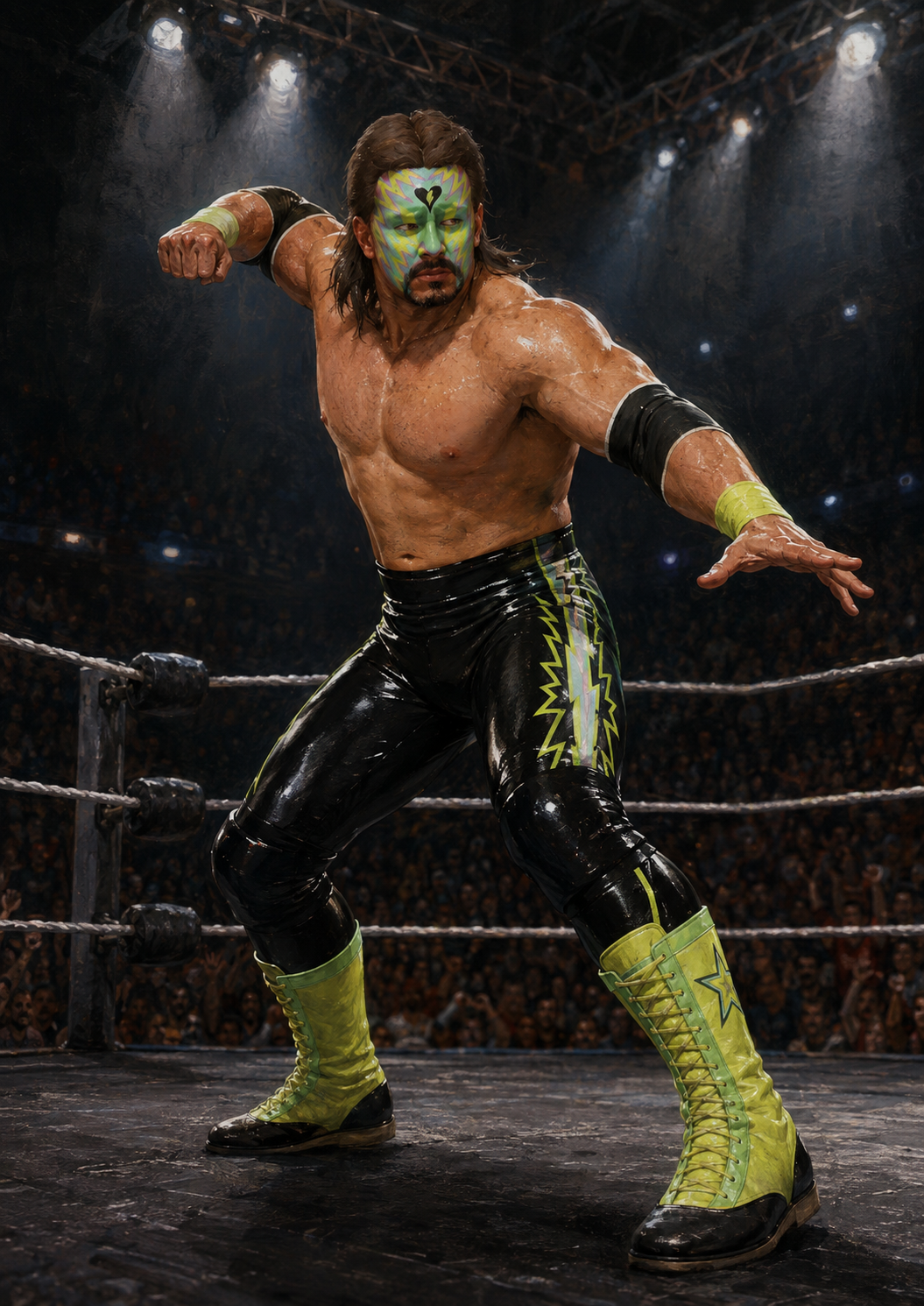
Billed From | Height | Weight | Wrestling Style |
|---|---|---|---|
Calgary, Alberta, Canada | 5'11" | 228 lbs | Strong Style
Technician
Powerhouse |
Signature Moves | Trademark Moves | Inspired By | Fights Like |
|---|---|---|---|
Bridging Northern Lights Suplex
Swinging Fisherman Suplex
Belly-to-Back Suplex
Dragon Suplex
Short-Range Lariat | Lightning Lock (Crossface / Cloverleaf hybrid)
Northern Lights Bomb
Anaconda Vice
Bolt Breaker (Arm-Trap Gutwrench Brainbuster)
Tenzan Tombstone Driver | A heroic masked junior ace with a blend of legacy precision, explosive speed, and controlled mystiquek | Mike Quackenbush
Reckless Youth (Tom Carter)
Owen Hart
Kensuke Sasaki
Hiroyoshi Tenzana |
Trained By | Theme | Video Link |
|---|---|---|
Canadian Independent Wrestling
Empire Wrestling Federation System | Ride or Bleed | https://music.youtube.com/watch?v=z4Necoppc28&si=ClLVwyf3T2gokzFn |
Profile Overview |
|---|
Before he ever became Bolt Jamison, he was just another hard-traveling prospect trying to survive the Canadian independents. He learned the trade in cramped halls, rough rings, and in front of crowds that respected effort more than polish. That stretch of his life hardened him, but it did not define him the way the infamous Canadian Death Tour—also remembered as the Northern Hell Tour—did. Bolt endured that run and came out of it with a reputation for stamina, toughness, and composure under punishment. He was not the loudest man on the loop, nor the wildest. He was the one who kept going. That reputation eventually earned him a recommendation for a shot in Empire Wrestling Federation, where the next phase of his career began.
When he arrived in EWF, the office did not introduce him as Bolt Jamison. They repackaged him as Raiden-Kikai, or Lightning Machine, a face-painted heel gaijin persona built around intimidation, violent power, and the image of an unstoppable wrecking force. Bolt committed fully to the assignment, because that was what the system demanded, but the persona never fully contained the wrestler underneath it. As the office learned more about his Japanese heritage, they gradually allowed the Raiden-Kikai identity to fall away. The paint came off in stages, the gimmick loosened, and the man behind it finally stepped into focus. What emerged was Bolt Jamison: half Caucasian, half Japanese, Canadian by origin, and far more complete than the role he had first been handed. That transformation gave his career its true direction. He was no longer playing a machine. He was becoming a master.
Returning to North America, Bolt relocated to Philadelphia and helped create the Independent Union. That move gave him a home that matched his philosophy of wrestling: creative without being soft, technical without being sterile, and intense without losing its sense of wonder. Over time he became one of the defining institutional figures of the promotion, first as a wrestler, then as its lead trainer, and eventually as both the Independent Union’s Director of Chaos and a member of the WWWN Board of Directors. In every stage of that ascent, Bolt earned his place by proving that his knowledge of wrestling was not theoretical. He had paid for it in miles, bruises, reinventions, and years. Even now, as a semi-retired veteran, Bolt carries the aura of a man who can still step into the ring and make younger wrestlers feel like students again. He is not simply a respected elder. He is one of the men who helped build the system and still knows how to enforce it. |
Before he ever became Bolt Jamison, he was just another hard-traveling prospect trying to survive the Canadian independents. He learned the trade in cramped halls, rough rings, and in front of crowds that respected effort more than polish. That stretch of his life hardened him, but it did not define him the way the infamous Canadian Death Tour—also remembered as the Northern Hell Tour—did. Bolt endured that run and came out of it with a reputation for stamina, toughness, and composure under punishment. He was not the loudest man on the loop, nor the wildest. He was the one who kept going. That reputation eventually earned him a recommendation for a shot in Empire Wrestling Federation, where the next phase of his career began.
When he arrived in EWF, the office did not introduce him as Bolt Jamison. They repackaged him as Raiden-Kikai, or Lightning Machine, a face-painted heel gaijin persona built around intimidation, violent power, and the image of an unstoppable wrecking force. Bolt committed fully to the assignment, because that was what the system demanded, but the persona never fully contained the wrestler underneath it. As the office learned more about his Japanese heritage, they gradually allowed the Raiden-Kikai identity to fall away. The paint came off in stages, the gimmick loosened, and the man behind it finally stepped into focus. What emerged was Bolt Jamison: half Caucasian, half Japanese, Canadian by origin, and far more complete than the role he had first been handed. That transformation gave his career its true direction. He was no longer playing a machine. He was becoming a master.
Returning to North America, Bolt relocated to Philadelphia and helped create the Independent Union. That move gave him a home that matched his philosophy of wrestling: creative without being soft, technical without being sterile, and intense without losing its sense of wonder. Over time he became one of the defining institutional figures of the promotion, first as a wrestler, then as its lead trainer, and eventually as both the Independent Union’s Director of Chaos and a member of the WWWN Board of Directors. In every stage of that ascent, Bolt earned his place by proving that his knowledge of wrestling was not theoretical. He had paid for it in miles, bruises, reinventions, and years. Even now, as a semi-retired veteran, Bolt carries the aura of a man who can still step into the ring and make younger wrestlers feel like students again. He is not simply a respected elder. He is one of the men who helped build the system and still knows how to enforce it.
Profile Wrestling Style |
|---|
Bolt Jamison wrestles like a complete craftsman whose offense was forged from several schools but refined into one voice. His base is technical: smooth control holds, clean transitions, cradle variations, and suplexes that feel placed rather than thrown away. From that foundation, he layers in heavy strikes and compact bursts of power, giving his matches the feeling of steady escalation rather than random fireworks. The Northern Lights family, fisherman variations, lariats, dragon-style throws, and crossface or cloverleaf-based submissions all fit him naturally, while bigger finish-level offense like the arm-trap gutwrench brainbuster, Northern Lights Bomb, and Tenzan Tombstone Driver give him the authority of a true heavyweight threat.
What separates Bolt from other veteran hybrids is that he does not wrestle like a man showing off range; he wrestles like a teacher choosing the correct lesson. Against faster opponents, he cuts them off with timing and ring positioning. Against technicians, he forces them to deal with harder contact and deeper leverage. Against power wrestlers, he meets them with structure and balance instead of panic. His offense is not built around spectacle for its own sake. It is built around making an opponent feel that every answer they try has already been anticipated. That is why Bolt’s matches often feel heavier than his size alone would suggest. He carries the snap of a polished technician, the bite of a strong style veteran, and the finishing gravity of a powerhouse who knows exactly when to stop teaching and start ending things. |
Bolt Jamison wrestles like a complete craftsman whose offense was forged from several schools but refined into one voice. His base is technical: smooth control holds, clean transitions, cradle variations, and suplexes that feel placed rather than thrown away. From that foundation, he layers in heavy strikes and compact bursts of power, giving his matches the feeling of steady escalation rather than random fireworks. The Northern Lights family, fisherman variations, lariats, dragon-style throws, and crossface or cloverleaf-based submissions all fit him naturally, while bigger finish-level offense like the arm-trap gutwrench brainbuster, Northern Lights Bomb, and Tenzan Tombstone Driver give him the authority of a true heavyweight threat.
What separates Bolt from other veteran hybrids is that he does not wrestle like a man showing off range; he wrestles like a teacher choosing the correct lesson. Against faster opponents, he cuts them off with timing and ring positioning. Against technicians, he forces them to deal with harder contact and deeper leverage. Against power wrestlers, he meets them with structure and balance instead of panic. His offense is not built around spectacle for its own sake. It is built around making an opponent feel that every answer they try has already been anticipated. That is why Bolt’s matches often feel heavier than his size alone would suggest. He carries the snap of a polished technician, the bite of a strong style veteran, and the finishing gravity of a powerhouse who knows exactly when to stop teaching and start ending things.