
PROJECT WWWN
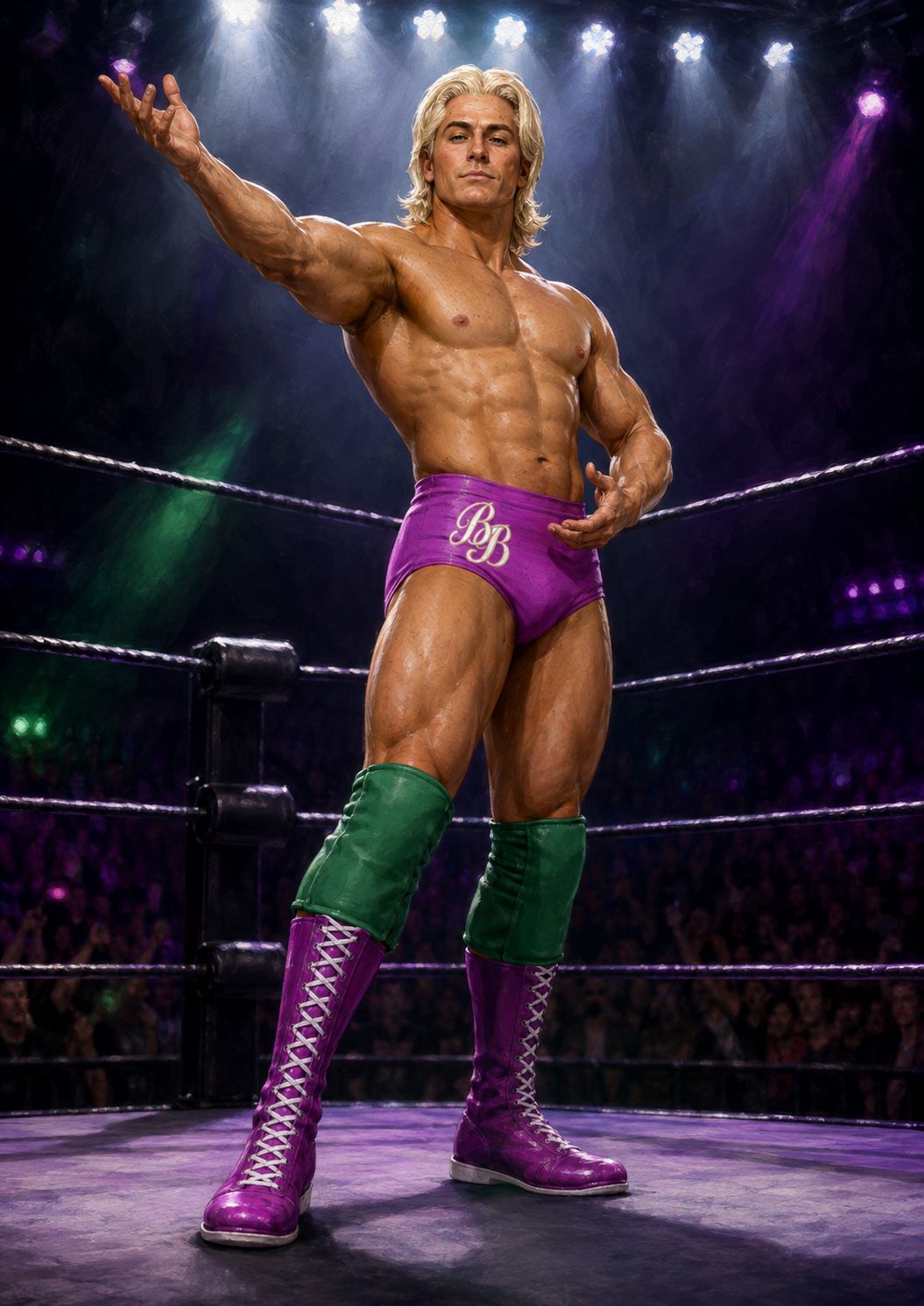
Billed From | Height | Weight | Wrestling Style |
|---|---|---|---|
The Biltmore Conservatory, Asheville, North Carolina | 6'1" | 229 lbs | Technical
American
Striker |
Signature Moves | Trademark Moves | Inspired By | Fights Like |
|---|---|---|---|
The Greenhouse Cut — Chop Block
The Peacock Drop — Delayed Knee Drop
Garden Party Combo — Knife-Edge Chop Rush, Low Kick to the Knee, Snapmare, Knee Drop
The Rogers Receipt — Eye Rake into Small Package
Blue-Blood Breaker — Backbreaker into Neckbreaker | The Conservatory — Figure-Four Leglock
Eden’s Fall — Piledriver
Pruning Shears — Indian Deathlock
The Last Bloom — Bridging Fisherman Suplex
False Inheritance — Rope-Assisted Roll-Up | The Last Name Anderson Professional Wrestling | Buddy Rogers
Ric Flair
Buddy Landel
Roger Kirby
Adrian Street
William Regal
Scoot Andrews
Tito Senza
Verne Siebert
Paul Lee
Kevin White
Tommy Phelps
Ricky Sexton
Jack Britton
Buddy Lee
Hans Mortier
Hans Bauer
Chief Lone Eagle
Gary Gold
George Harris
Farmer Brown
Ricky Fuji
Austin Steele
Steve Schumann
Buddy Austin
Jeff Rhodes |
Trained By | Theme | Video Link |
|---|---|---|
All About the Victory | https://music.youtube.com/watch?v=bQar5sWaKT8&si=Bl5Dx9R7QtwlML8- |
Profile Overview |
|---|
Beaumont “Beau” Bloom was born into the kind of Southern family that treated reputation like inheritance and failure like disease. Raised around old estates, formal gardens, country clubs, and wrestling tapes from every territory that still mattered, Beau developed an obsession with presentation before he ever learned a wristlock. He believed from an early age that wrestling was not just a sport, but a public ceremony where the best man should also look like the best man. While other young wrestlers studied powerbombs and dives, Beau studied robes, posture, pacing, interviews, and how one arrogant glance could make an entire crowd want to see a man humbled. The “Nature Boy” name fascinated him because it was never just a nickname to him; it was a crown passed through wrestling history, stolen, disputed, re-polished, and dragged from territory to territory by men who understood spectacle. He saw Buddy Rogers as the origin, Ric Flair as the global empire, Buddy Landel as the beautiful disaster, Roger Kirby as the territorial ghost, and Adrian Street as proof that glamor could become a weapon. Beau did not want to imitate them exactly, because imitation was too small a goal for a man with his ego. He wanted to cultivate the lineage, prune away what he considered weakness, and bloom into what he calls “the final form of the Nature Boy.” In his own mind, he is not a tribute act; he is the man who finally made the title respectable again.
Beau’s path into WWWN began in Southern Premier Wrestling, where he was initially dismissed as another pretty robe with old money and too much perfume. Dog-Bite Devereux taught him that flash meant nothing if a man could not survive a punch to the mouth, while Le Masquerade helped him understand how beauty, timing, and insult could become part of match psychology. Later, Gran Fujimoto refined the technical side of his game, forcing Beau to earn every hold and abandon the idea that charisma alone could carry a match. That training created a wrestler who could talk like a peacock, cheat like a scoundrel, and still wrestle clean enough to make critics angry when they had to admit he was good. Beau entered WWWN claiming that the company’s obsession with legacy had finally created a place worthy of him. He immediately began calling other wrestlers “common soil,” saying some men were born to bloom and others existed only to be stepped over. This attitude put him at odds with blue-collar wrestlers, roughneck veterans, young lions, and anyone who believed legacy had to be earned through humility. Beau does not reject WWWN history; he weaponizes it, quoting old champions, mocking fallen territories, and acting like every past legend was merely a root system feeding his arrival. His deepest flaw is that he cannot separate admiration from possession, and the harder fans call him a knockoff, the more desperately he tries to prove the robe belongs to him.
Within WWWN, Beaumont “Beau” Bloom functions as a Legacy Thief, a man who understands tradition well enough to exploit it. He is not a monster, not a cultist, and not a chaotic brawler; he is something more irritating to the locker room, a polished manipulator who turns respect for the past into a personal marketing campaign. Fans hate him because he is talented enough that they cannot dismiss him, but vain enough that they cannot fully respect him. His matches often become arguments about authenticity, especially against wrestlers like Michael Maverick, Dog-Bite Devereux, Dennis Wolfe, or any young competitor trying to make their name without leaning on borrowed mythology. Beau sees the World Heavyweight Title as the ultimate boutonnière, the final flower pinned to the lapel of a man who has already decided he deserves the world. He also fits naturally around the On-Demand Title scene because his arrogance works well in shorter television feuds, where he can insult opponents, target a knee, steal a win, and spend the next week pretending victory proved class superiority. His presence gives WWWN a glamorous heel who can talk, wrestle, cheat, and lose his composure when the crowd refuses to validate him. The longer he remains in the promotion, the more his question becomes unavoidable: is he preserving wrestling history, or is wrestling history slowly exposing him? In Beaumont Bloom’s mind, every garden needs pruning, and every generation needs one man elegant enough to decide what gets cut. |
Beaumont “Beau” Bloom was born into the kind of Southern family that treated reputation like inheritance and failure like disease. Raised around old estates, formal gardens, country clubs, and wrestling tapes from every territory that still mattered, Beau developed an obsession with presentation before he ever learned a wristlock. He believed from an early age that wrestling was not just a sport, but a public ceremony where the best man should also look like the best man. While other young wrestlers studied powerbombs and dives, Beau studied robes, posture, pacing, interviews, and how one arrogant glance could make an entire crowd want to see a man humbled. The “Nature Boy” name fascinated him because it was never just a nickname to him; it was a crown passed through wrestling history, stolen, disputed, re-polished, and dragged from territory to territory by men who understood spectacle. He saw Buddy Rogers as the origin, Ric Flair as the global empire, Buddy Landel as the beautiful disaster, Roger Kirby as the territorial ghost, and Adrian Street as proof that glamor could become a weapon. Beau did not want to imitate them exactly, because imitation was too small a goal for a man with his ego. He wanted to cultivate the lineage, prune away what he considered weakness, and bloom into what he calls “the final form of the Nature Boy.” In his own mind, he is not a tribute act; he is the man who finally made the title respectable again.
Beau’s path into WWWN began in Southern Premier Wrestling, where he was initially dismissed as another pretty robe with old money and too much perfume. Dog-Bite Devereux taught him that flash meant nothing if a man could not survive a punch to the mouth, while Le Masquerade helped him understand how beauty, timing, and insult could become part of match psychology. Later, Gran Fujimoto refined the technical side of his game, forcing Beau to earn every hold and abandon the idea that charisma alone could carry a match. That training created a wrestler who could talk like a peacock, cheat like a scoundrel, and still wrestle clean enough to make critics angry when they had to admit he was good. Beau entered WWWN claiming that the company’s obsession with legacy had finally created a place worthy of him. He immediately began calling other wrestlers “common soil,” saying some men were born to bloom and others existed only to be stepped over. This attitude put him at odds with blue-collar wrestlers, roughneck veterans, young lions, and anyone who believed legacy had to be earned through humility. Beau does not reject WWWN history; he weaponizes it, quoting old champions, mocking fallen territories, and acting like every past legend was merely a root system feeding his arrival. His deepest flaw is that he cannot separate admiration from possession, and the harder fans call him a knockoff, the more desperately he tries to prove the robe belongs to him.
Within WWWN, Beaumont “Beau” Bloom functions as a Legacy Thief, a man who understands tradition well enough to exploit it. He is not a monster, not a cultist, and not a chaotic brawler; he is something more irritating to the locker room, a polished manipulator who turns respect for the past into a personal marketing campaign. Fans hate him because he is talented enough that they cannot dismiss him, but vain enough that they cannot fully respect him. His matches often become arguments about authenticity, especially against wrestlers like Michael Maverick, Dog-Bite Devereux, Dennis Wolfe, or any young competitor trying to make their name without leaning on borrowed mythology. Beau sees the World Heavyweight Title as the ultimate boutonnière, the final flower pinned to the lapel of a man who has already decided he deserves the world. He also fits naturally around the On-Demand Title scene because his arrogance works well in shorter television feuds, where he can insult opponents, target a knee, steal a win, and spend the next week pretending victory proved class superiority. His presence gives WWWN a glamorous heel who can talk, wrestle, cheat, and lose his composure when the crowd refuses to validate him. The longer he remains in the promotion, the more his question becomes unavoidable: is he preserving wrestling history, or is wrestling history slowly exposing him? In Beaumont Bloom’s mind, every garden needs pruning, and every generation needs one man elegant enough to decide what gets cut.
Profile Wrestling Style |
|---|
Beaumont “Beau” Bloom wrestles like a man trying to make cruelty look expensive. His base is classic American technical wrestling, built around wrist control, headlocks, snapmares, suplexes, knee work, and constant positioning near the ropes. He targets the leg early because everything in his match is designed to lead back to The Conservatory, his Figure-Four Leglock. Beau uses knife-edge chops as both offense and insult, often pausing after each one to admire the mark he leaves behind. He is not a pure powerhouse, but he is strong enough to hit a clean backbreaker, piledriver, or bridging fisherman suplex when an opponent forgets he can wrestle underneath the vanity. His pacing is deliberate, with bursts of theatrical energy whenever the crowd starts to boo. He wants the match to feel like a formal humiliation, not a fight he accidentally stumbled into.
Psychologically, Beau’s style depends on control, embarrassment, and baiting opponents into emotional mistakes. He struts to slow the rhythm, powders out to break momentum, and uses robe removal or corner posing to make the audience feel trapped inside his ego. Against faster opponents, he clips the knee and forces them into mat exchanges where his leverage matters more than their speed. Against brawlers, he avoids fair collisions and turns the ropes, referee, and ring apron into tools of survival. He prefers to cheat in ways that look deniable: a thumb to the eye during a collar-and-elbow, a foot on the rope during a pin, or a desperate handful of tights after claiming he won by “superior cultivation.” When he is confident, he is graceful and infuriating. When he is exposed, his elegance cracks, and the polished Nature Boy becomes a desperate man terrified that the crowd can see the roots showing. |
Beaumont “Beau” Bloom wrestles like a man trying to make cruelty look expensive. His base is classic American technical wrestling, built around wrist control, headlocks, snapmares, suplexes, knee work, and constant positioning near the ropes. He targets the leg early because everything in his match is designed to lead back to The Conservatory, his Figure-Four Leglock. Beau uses knife-edge chops as both offense and insult, often pausing after each one to admire the mark he leaves behind. He is not a pure powerhouse, but he is strong enough to hit a clean backbreaker, piledriver, or bridging fisherman suplex when an opponent forgets he can wrestle underneath the vanity. His pacing is deliberate, with bursts of theatrical energy whenever the crowd starts to boo. He wants the match to feel like a formal humiliation, not a fight he accidentally stumbled into.
Psychologically, Beau’s style depends on control, embarrassment, and baiting opponents into emotional mistakes. He struts to slow the rhythm, powders out to break momentum, and uses robe removal or corner posing to make the audience feel trapped inside his ego. Against faster opponents, he clips the knee and forces them into mat exchanges where his leverage matters more than their speed. Against brawlers, he avoids fair collisions and turns the ropes, referee, and ring apron into tools of survival. He prefers to cheat in ways that look deniable: a thumb to the eye during a collar-and-elbow, a foot on the rope during a pin, or a desperate handful of tights after claiming he won by “superior cultivation.” When he is confident, he is graceful and infuriating. When he is exposed, his elegance cracks, and the polished Nature Boy becomes a desperate man terrified that the crowd can see the roots showing.